Digital Rotory Evaporator
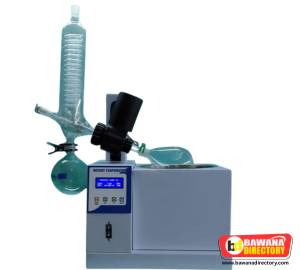
R T Scientific Equipment''s
Deepak Khanna : 7703829531, Amit Khanna : 8920846933, Jai Khanna : 7011418672... See More.
Description
A digital rotary evaporator (or digital rotovap) is a laboratory device used primarily for the efficient and gentle removal of solvents from samples by evaporation. Compared to analog models, digital rotary evaporators offer more precise control and often include modern features that enhance safety, accuracy, and ease of use.
Key Features of a Digital Rotary Evaporator:
1. Digital Control Interface
LCD or LED screen for real-time display of parameters.
Digital control of rotation speed, bath temperature, and vacuum.
Preset programs or memory functions for repetitive tasks.
2. Variable Speed Control
Adjustable rotation speeds (typically 20–280 rpm) to optimize evaporation efficiency and prevent bumping.
3. Digital Temperature Control
Precise heating bath control (usually water or oil baths).
Temperature range typically up to 180°C.
Overheat protection mechanisms.
4. Vacuum Control Integration
Some models include digital vacuum controllers for precise pressure regulation.
Compatible with external vacuum pumps.
Automatic vacuum adjustment helps prevent solvent bumping or foaming.
5. Automatic Lifting Mechanism
Motorized lift for raising and lowering the evaporation flask.
Can be programmed for automatic lift at end of process or power outage.
6. Safety Features
Over-temperature and over-pressure protection.
Sealed systems to prevent solvent leaks and exposure.
Emergency stop function.
7. Condensation System
Efficient vertical or diagonal condenser coils (often double-helix or serpentine).
Digital monitoring of cooling temperatures.
Integrated recirculating chiller compatibility.
8. Sample Versatility
Range of flask sizes (typically 50 mL to 3 L or more).
Interchangeable components for different applications.
9. Remote or PC Connectivity (optional in advanced models)
USB or RS232 interface for data logging and remote control.
Integration with lab automation systems.
10. Compact and Ergonomic Design
Space-saving footprint.
Easy-to-clean materials (borosilicate glass, PTFE seals).
Applications:
Solvent removal in organic chemistry.
Concentration of solutions.
Recrystallization and purification.
Extraction of bioactive compounds in pharmaceuticals or natural product labs.
Leave a comment